
Job Loss? What to Do With Your House Next If You Need To Sell Now
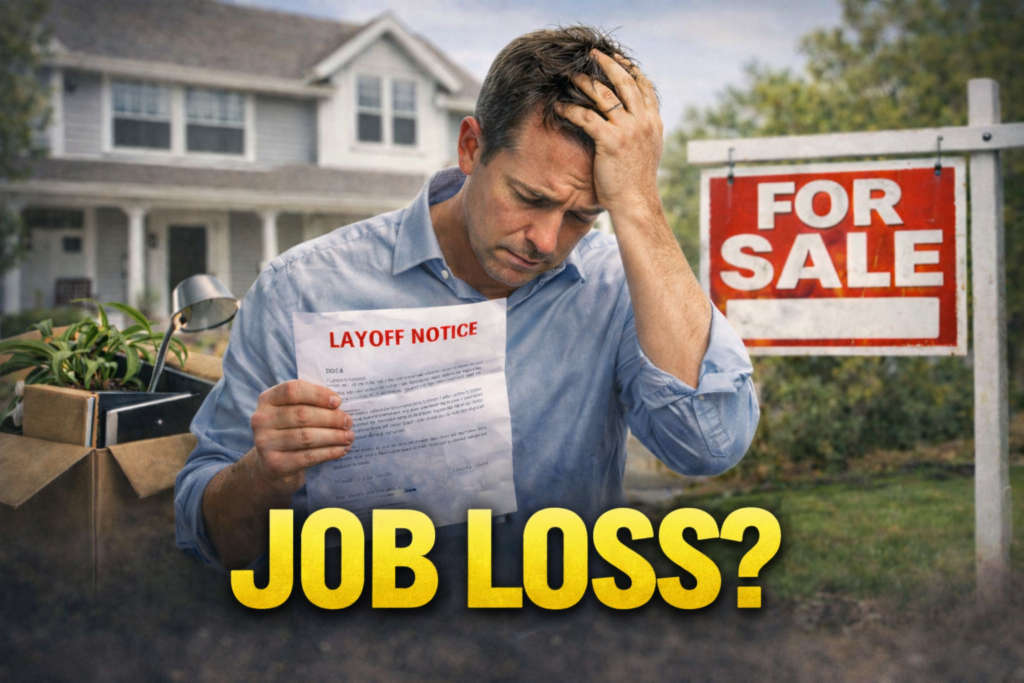
Dealing with job loss? Learn how to handle impact and next steps with the house.
Job loss changes things quickly. What felt stable not long ago can suddenly feel uncertain, especially when a mortgage and monthly housing costs are still there.
The pressure is not always immediate, but it builds over time. Savings start to get used, decisions get pushed off, and the same question keeps coming up in the background. How long can this realistically continue?
At some point, the house becomes part of that decision whether you want it to or not.
What Job Loss Actually Changes
When job loss happens, it is not just income that disappears. It is consistency and predictability. Without those, even manageable expenses can start to feel heavy.
Housing is usually the largest fixed cost. That means the mortgage does not adjust, property taxes and insurance continue, and maintenance does not pause. Even small issues feel bigger when there is no clear timeline for replacing income.
This is where financial pressure quietly builds without always being obvious at first.
After job loss, most homeowners try to stabilize before making any major decisions. That is a normal response.
They focus on finding new income, cutting back where they can, and using savings to bridge the gap. For a period of time, this can work.
What often happens, though, is a gradual shift. Savings get lower, stress increases, and decisions that were put off start to feel more urgent. The timeline becomes less flexible.
What Buyers Sense Even If You Don’t Say It
Buyers do not know about your job loss, but they often pick up on signals.
Those signals can come through pricing decisions, urgency in communication, or willingness to negotiate. When buyers feel that, they tend to respond in predictable ways.
They may push harder on price, ask for more concessions, or move more aggressively during negotiations. Without a plan, it becomes easy to react instead of staying in control.
Your Options When Dealing With Job Loss
There are several directions you can take, and each one depends on your situation.
You can hold the property and rely on savings while working toward new income. This works best when your timeline is short and your financial cushion is strong.
You can reduce other expenses and try to maintain the home, but this usually delays the decision rather than solving it.
You can also look at the property as something you can control rather than something you have to carry. That shift often creates more flexibility and clarity.
Most difficult outcomes related to job loss do not happen right away. They happen after time passes without a clear plan.
Payments start to feel heavier, stress begins to affect decision making, and options slowly narrow. What could have been a controlled decision becomes a reactive one.
By the time action is taken, there is often less flexibility than there was earlier.
What You Should Do First
If you are dealing with job loss, the first step is to get honest about your timeline.
Not best case, but realistic. How long can you carry the property comfortably before it starts to create pressure?
From there, look at the home objectively. Consider its condition, how quickly it could be sold if needed, and what level of effort would be required. This gives you a clear picture instead of a guess.
There are situations where acting sooner reduces both risk and stress. If savings are being used quickly, income is uncertain, or the property requires ongoing expense, waiting can make the situation more difficult. Taking action earlier allows you to make decisions with more control and less pressure.
Waiting can make sense if your situation is stable enough to support it. If you have strong reserves, expect income to return soon, and the home is not creating additional issues, holding may be reasonable. Even then, it helps to have a clear point where you reassess instead of letting time pass without direction.
Why This Gets Harder Over Time
Job loss on its own is already difficult. When combined with a property that requires ongoing expense, it becomes heavier as time goes on. The longer decisions are delayed, the more pressure builds. That pressure often leads to rushed decisions instead of clear ones. Clarity early tends to lead to better outcomes.
How We Help In This Situation
We focus on reducing complexity during a time that is already uncertain.
- Sell the house as-is
- No repairs or updates required
- No showings or added pressure
- Flexible timing based on your situation
- Clear and straightforward process
The goal is to give you options without adding more to manage. If you are dealing with job loss, the most important thing is not to ignore the situation or let it quietly build. You do not need to rush into a decision, but you do need a clear understanding of your options. When you are ready, we will walk through it with you so you can move forward without guesswork.
You do not need to have everything figured out before reaching out. We can look at the house, the situation, and what may make sense from here.
You can also see where we help owners who have dealt with ‘can’t sell house!’ pains by clicking here.
Fill out the form on this page and let’s get started. Prefer to talk first? Call or text 678-408-2228 and ask what may make sense for your house.
Related situations you might be facing:
We work with homeowners facing job loss across more than 50 locations and growing. From the Southeast through the Midwest and beyond, if you have a house and a situation that needs solving, reach out as we visit new places all the time. See where we currently serve.
And in case you are wondering who we are, our founders are looking forward to meeting you. You can check them out here:
Frank – https://frankiglesias.com
Or you can check him out on video at https://workingwithhouses.com
Melanie – https://melanievargas.net
Still Have Questions? We answer many of them here.